Netanyahu Not Ruling Out Eisenkot Coalition, Report Says
Netanyahu publicly denied unity plans; his bloc lacks a majority.
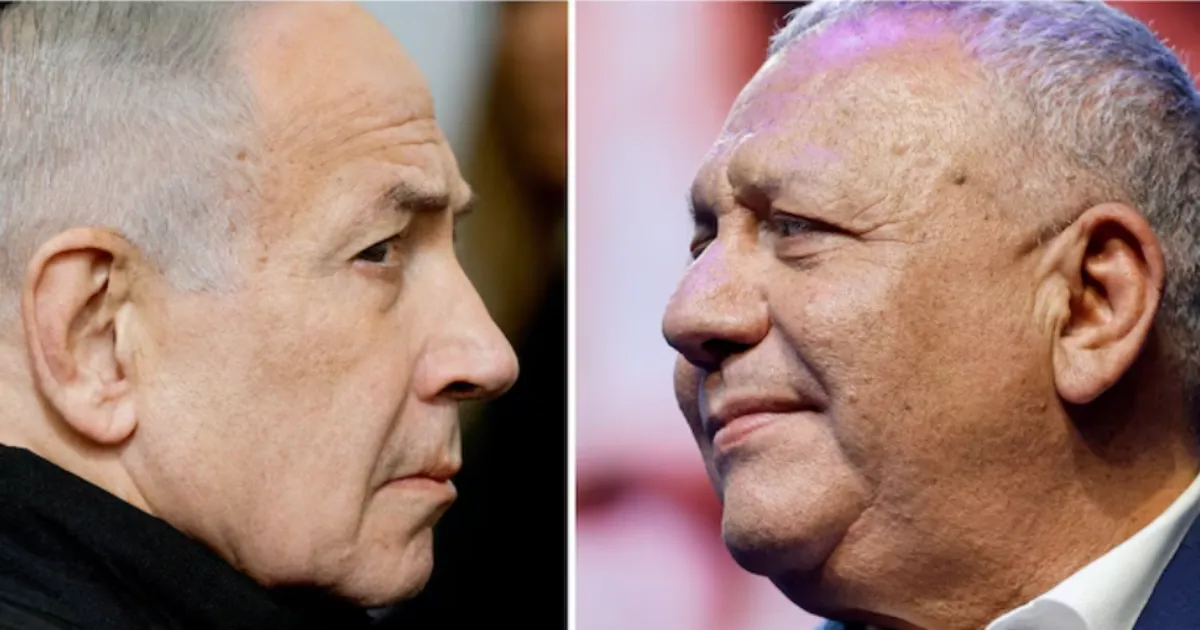
Israeli Prime Minister Benjamin Netanyahu has reportedly kept open the possibility of forming a coalition government with opposition leader Gadi Eisenkot as Israel faces a political deadlock following the 2026 election. Despite publicly denying plans for a unity government, sources close to Netanyahu's Likud party said he had not ruled out an alliance with Eisenkot's Yashar party, according to Israeli media reports on Monday. The reported flexibility comes as Netanyahu's political bloc has fallen short of the parliamentary majority needed to form a government independently.
Sources close to Likud indicated that Netanyahu was examining his options as political parties assess the election outcome and the prospects of forming a stable administration. The reported discussions suggest that a partnership with Eisenkot could emerge as one possible route out of the impasse. However, the reported openness to an alliance does not establish that formal negotiations have begun or that an agreement has been reached between the two political camps.
Netanyahu has publicly denied plans to establish a unity government, creating a contrast with reports that people close to his party are keeping the possibility of cooperation under consideration. The difference between his public position and the reported private discussions highlights the uncertainty surrounding the coalition-building process. With the prime minister's bloc unable to secure a parliamentary majority on its own, negotiations and potential partnerships could become central to determining the country's next government.
Also Read: Israel Election Deadlock And Its Potential Impact On India, Iran And Gaza
Eisenkot, who leads the Yashar party, is a potential partner in the efforts to resolve the political deadlock. Any arrangement between his party and Netanyahu's Likud would require political agreement on the terms of cooperation and the composition of a governing coalition. The reported possibility of an alliance therefore remains contingent on discussions between the parties and their willingness to work together after the election.
The election results are expected to be officially certified this week, a step that would formalise the outcome and provide a clearer basis for the next stage of government formation. Certification is an important part of the electoral process, although it does not by itself resolve the challenge of assembling a parliamentary majority. Political leaders will still need to determine whether a viable coalition can be formed and which parties are prepared to participate in it.
For Netanyahu, the reported willingness to consider an arrangement with Eisenkot could provide another option as he attempts to navigate the post-election impasse. Nevertheless, the prime minister's public denial of unity plans means the possibility remains uncertain. The immediate focus is on the official certification of the results and subsequent political negotiations, which will determine whether the reported opening develops into a formal coalition agreement or whether other options are pursued.
Also Read: Gadi Eisenkot’s Journey From Israel’s Top General To Political Challenger